
Nov 24, 2026
How to Use Bulk Stevia Extract Powder in Beverages
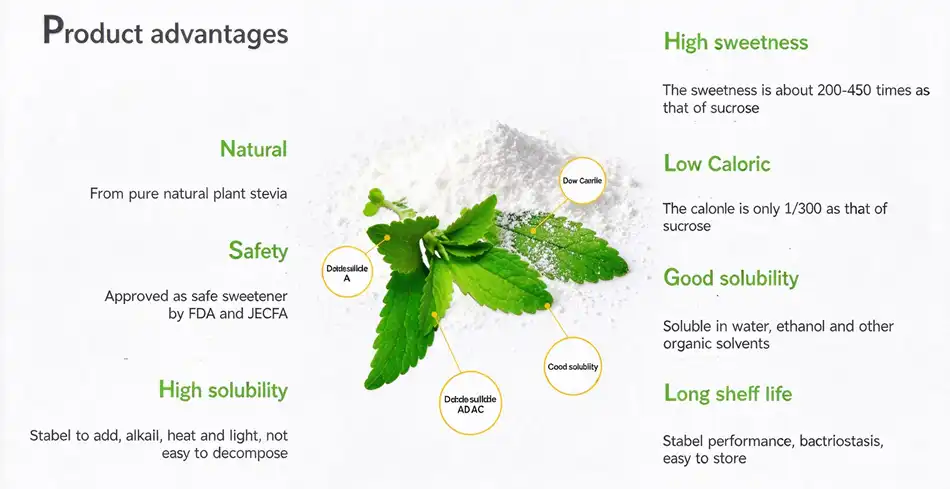
The first step to using bulk stevia extract powder in drinks is to pick the proper specification for your application. It is a white powder extracted from the leaves of the Stevia rebaudiana plant that is 200 to 300 times sweeter than sucrose and has no calories. It has no glycemic effect making it good for sugar free sodas, RTD teas, energy drinks and functional waters. Because steviol glycoside requirements vary greatly (Reb A 40% to Reb M 95%), choosing the correct grade for your beverage matrix is the single most important formulation choice you will make.
Understanding Bulk Stevia Extract Powder and Its Benefits
What Makes Stevia Extract Different from Other Sweeteners
The leaves contain the sweet compounds that make stevia function, called steviol glycosides. They are taken off with water, purified by means of chromatography and dried by spray. You end up with a white powder that won't cling to shelves and will flow freely. Particles are always either 80 or 120 mesh. Stevia does not cause the release of insulin as sugar does. Unlike aspartame or sucralose, it is made from plants, which supports clean-label claims that today's health-conscious customers genuinely believe in.
The main zero-calorie options are useful when you put them next to each other:
Standard-grade glycosides that are 97–99% Reb A have the best sweetness profile. It works quickly and doesn't leave a bitter taste, which makes it great for carbonated drinks and flavored waters.
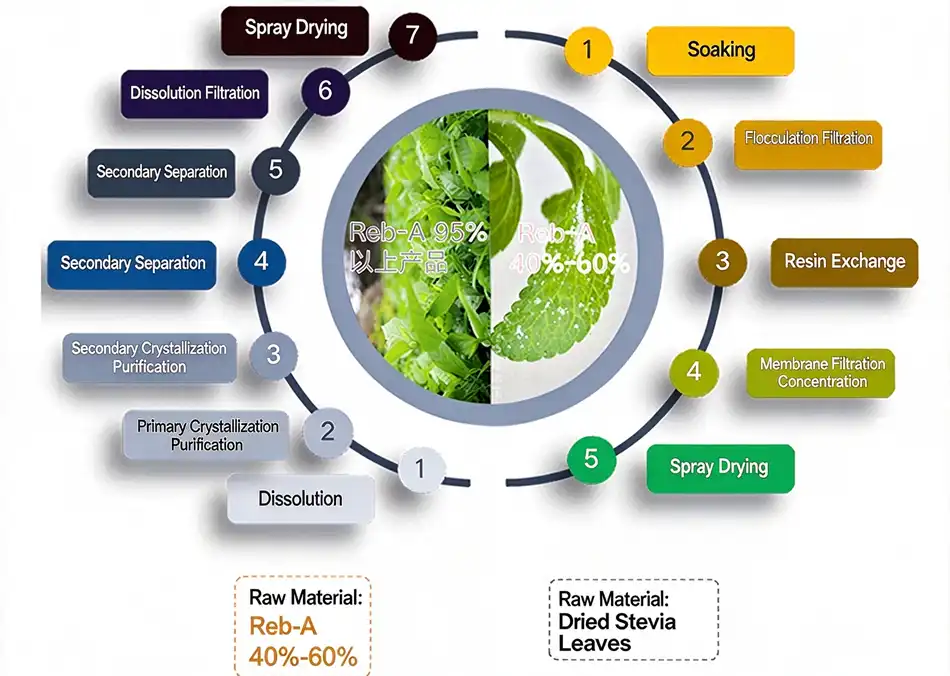
- Rebaudioside A (Reb A) 97–99% delivers the cleanest sweetness profile among standard-grade glycosides, with a rapid onset and minimal residual bitterness—well-suited for carbonated soft drinks and flavored waters.
- Among all glycosides, Rebaudioside M (Reb M) 95% has a round mouthfeel similar to sucrose and almost no lasting aftertaste, so is the option for luxury dairy drinks and protein shakes.
- TSG (total steviol glycosides) 75-95% Cost efficient for use in applications where flavour masking chemicals are already included, such as highly flavoured energy drinks or vitamin-fortified injections.
- Glucosyl Steviol Glycosides (GSG) are enzymatically treated to further minimise bitterness and to provide a sweetness profile that combines well with other natural sweeteners such as erythritol or allulose.
On a big level, this difference matters. People who make clear sparkling water with TSG 80% will find it much more bitter than those who make it with Reb A 98%. You will not have to pay a lot of money for costly rewrites later on if you get the grade right during the sample process.
How to Use Bulk Stevia Extract Powder in Beverage Formulation
Dosage, Solubility, and Mixing Protocols
Since stevia juice is very strong, parts per million are used to figure out how much to use instead of numbers. Reb A 97% powder is the right amount of sweet for most drinks because it has 100 to 400 parts per million (ppm) of sugar. With a little shaking, the powder can be easily mixed into cold drinks that are at room temperature. This item can be used up to 200°C in hot-process lines, such as those that make pasteurized juice or UHT cheese, and it will still be sweet.
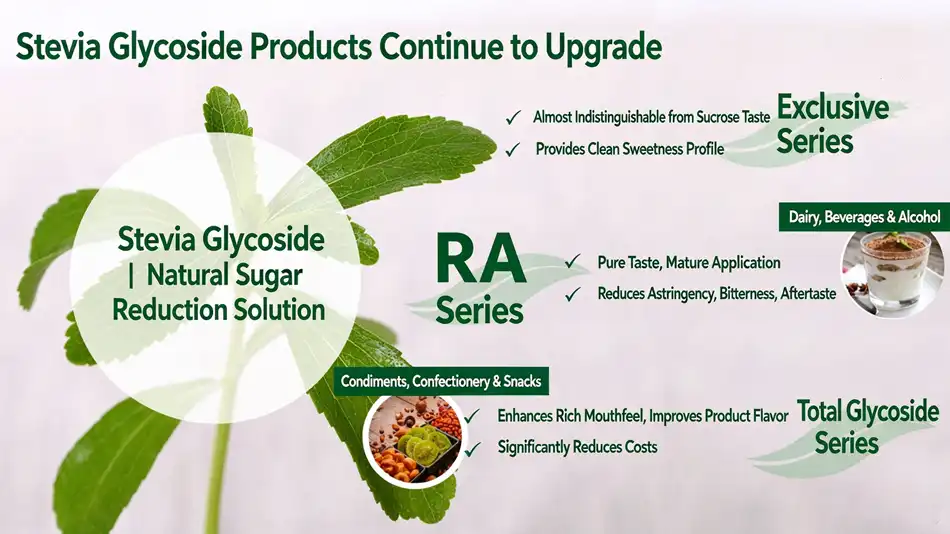
Being able to handle pH is also important for bulk stevia extract powder. The amount of glycosides in the extract stays the same from pH 3 to 9. This means that sports drinks (pH 3.2) and protein drinks (pH 8.5) can both be used. Aspartame is often mixed with acidic substances, which can cause a sweetness spread. This steadiness gets rid of that spread.
Tips that will help you mix that you should put in your SOP:
- Pre-disperse the powder in a small volume of warm water (40–60°C) before adding to the main batch to prevent micro-agglomeration.
- When co-sweetening with erythritol or allulose, add stevia extract last to calibrate final sweetness intensity with precision.
- In carbonated applications, dose before carbonation to allow full hydration and avoid foaming complications.
- For UHT-processed dairy drinks, confirm that the glycoside grade is TSG ≥ 90% or Reb A ≥ 95% to retain sensory integrity through retort temperatures.
You should always check your exact usage rate with in-house taste panels, even though these rules are usually good. This is because flavor carrier matrices change the sweetness limits in ways that no model can fully predict.
Safety, Side Effects, and Quality Considerations
Regulatory Standing and Sensory Risk Management
It is safe to eat high-purity steviol glycosides in the US. It is okay for them to be used as food ingredient E960 in the EU, and they meet the JECFA ADI guidelines of 4 mg/kg body weight per day. The minimum purity standards set by the USP and FCC monographs are used to test each batch of products made by reputable suppliers. HPLC is used to check these benchmarks.
When making drinks, most people worry about the aftertaste. Products that aren't as pure but still have a lot of stevioside tend to taste bitter and have a hint of licorice. When you upgrade to Reb A ≥ 97% or Reb M 95%, this effect is not as strong. Our COA for Reb M shows that it has a total glucoside content of 97.26%, and taste groups agreed that it has a clean taste at market rates. Adding a little erythritol, citric acid modulation, or natural flavor covering to stevia makes it taste even less bitter without adding any calories.
The amounts of heavy metals like lead (<1.0 ppm), arsenic (<0.1 ppm), cadmium (<0.1 ppm), and mercury (<0.1 ppm) in well-made goods are still well below the limits set by authorities. It's possible that some bacteria, like yeast, mold, E. coli, Salmonella, and Listeria, were not found or were below the limits set by FDA Chapter 4 methods.
Evaluating and Choosing Bulk Stevia Extract Powder Suppliers
Criteria That Distinguish Reliable Long-Term Partners
When going with a supplier for steviol glycosides, it's not just about price. For this type of ingredient, the specifications range from 40% to 99% for RA, 95% to 97% for RD, 95% to 97% for RM, 85% to 90% for GSG and 97% to 95% for TSG. This means that only sources with a truly full portfolio can meet changing formulation needs without the need for a second source.
The first step in checking bulk stevia extract powder is to look at the certifications. Make sure they have at least ISO 9001, Halal, and Kosher certificates. To sell in the U.S., you need to be registered with the FDA and show proof that you follow JECFA, USP, and FCC rules. In the Middle East and Southeast Asia, where goods are sold, Halal approval is more of a business must than a way to stand out.
The efficiency of logistics should be given the same amount of weight. A lot less risk is in the supply chain if the supplier has ready stock, a 25 kg drum MOQ for commercial orders, and a number of shipping options, such as DHL, FedEx, UPS express, air cargo, sea freight, and DDP door-to-door. The difference in lead times that throws off production schedules can be fixed by shipping quickly from stock that is already on hand.
Optimizing Cost and Performance in Bulk Purchase
Aligning Purity Grade with Cost-in-Use Economics
The price of stevia powder per kilogram on the package doesn't really show how much it costs to make something sweet. It's possible that TSG 80% powder costs less per kilogram than A Reb A 98% powder, but it can still add the same amount of sweetness. This means the end drink can have the same or a better taste for the same or less money per liter.
When you promise a lot of goods in the form of an annual supply agreement, prices often go down. When suppliers can handle 20,000 tons of goods every year, they don't have to stop sending goods during the contract term. Instead, they can keep their prices the same. Before taking on business quantities, get COAs and HPLC test reports that are special to each batch. Any seller you can trust will be happy to give them to you. Nuoyuanbio has sample packets of 100g that can be used for this. Trial samples should be checked for smell and taste before an annual framework order is made.
There are more and more natural sweeteners out there. From now until 2030, sales of stevia ingredients are likely to grow at a rate of over 8% per year. To do this, companies are being forced to change their recipes because countries in North America and Europe want less sugar. Because you locked in a legal and highly skilled service, your business is now ahead of the curve in terms of demand.
Conclusion
Stevia extract is an old kind of ingredient, but exact measurements are important for winning recipes when using bulk stevia extract powder. It is important to work with a supplier that can keep track of inventory, ship on time, and record every batch with HPLC data. This is what separates a product that passes your sensory panel from one that needs to be reformulated over and over again. When buying teams and R&D formulators talk the same language, it's easy for them to make that choice.
FAQ
1. Is stevia extract a direct 1:1 substitute for sugar in beverages?
No. Stevia extract is 200–300 times sweeter than sucrose, so addition rates are measured in parts per million. You will also need to compensate for the mouthfeel and bulk that sugar provides, typically through co-sweeteners like erythritol or allulose.
2. Which specification is best for carbonated soft drinks?
Reb A 97–99% is the standard choice for clear, carbonated applications because it dissolves cleanly, stays stable at low pH, and produces minimal aftertaste.
3. What certifications should I verify before purchasing?
At minimum: ISO 9001, JECFA compliance, USP/FCC purity alignment, FDA registration (for U.S. market), Halal (Middle East/Southeast Asia), and Kosher where required.
Partner with Nuoyuanbio — Your Trusted Bulk Stevia Extract Powder Supplier
This company, Nuoyuanbio, has all the details that your formulation team needs for bulk stevia extract powder. They also have HPLC batch testing, ISO 9001/Halal/Kosher certification, and inventory that is ready to ship. We can help you with anything from adding a new line of drinks to renegotiating an annual supply plan. Just let us know if you need samples, COAs, or technical help. Send an email to sales@nuoyuanbio.com or visit nuoyuanbio.com to get your free kit right away.
References
1. Carakostas, M. C., et al. "Overview: The history, technical function and safety of rebaudioside A, a naturally occurring steviol glycoside, for use in food and beverages." Food and Chemical Toxicology, 2008.
2. Joint FAO/WHO Expert Committee on food additives (JECFA). "Steviol glycosides: Safety evaluation." WHO Technical Report Series, 2009.
3. Prakash, I., et al. "Development of rebiana, a natural, non-caloric sweetener." Food and Chemical Toxicology, 2008.
4. Ashwell, M. "Stevia, nature's zero-calorie sustainable sweetener: A new player in the fight against obesity." Nutrition Today, 2015.
5. Goyal, S. K., Samsher, & Goyal, R. K. "Stevia (Stevia rebaudiana) a bio-sweetener: A review." International Journal of Food Sciences and Nutrition, 2010.
6. Samuel, P., et al. "Stevia leaf to stevia sweetener: Exploring its science, benefits, and future potential." Journal of Nutrition, 2018.
Online Message
