
Nov 19, 2026
How Jerusalem Artichoke Extract Powder Supports Gut Health
The Jerusalem artichoke extract powder is produced from the tubers of Helianthus tuberosus L., and is a concentrated source of inulin-type fructans that may specifically feed healthy gut flora. Bifidobacteria and Lactobacilli digest these fructan chains in the colon to form short-chain fatty acids, which help to build the intestinal lining and maintain normal bowel motion. Unlike generic fibre additives, high-purity inulin powder from Jerusalem artichoke tubers also helps to moderate postprandial glucose response, making it a strategically valuable ingredient for supplement brands, functional food manufacturers and bulk ingredient distributors operating in the U.S. market.
What Is Jerusalem Artichoke Extract Powder and Why Does It Matter for Gut Health?
A Prebiotic Ingredient Backed by Measurable Science
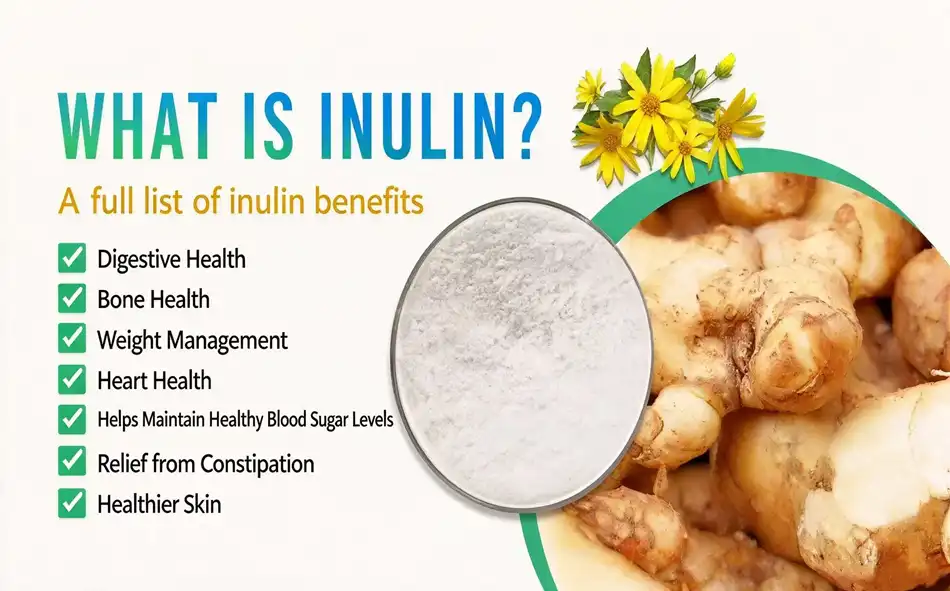
Inulin is a fructan that is found in the roots of the Jerusalem artichoke. It is made up of long lines of fructose units with a glucose molecule at the end of each chain. The polymerization level (DP) is between 2 and 60, which creates a stepwise fermentation profile in the distal colon. Shorter chains break down quickly, which helps bacteria grow quickly. Longer chains, on the other hand, reach deeper into the gut and keep the prebiotic window open for longer. One of the biggest problems brands that make gut health goods have to deal with is rapid gas production that makes customers mad and gets bad reviews. This wide DP spread directly lowers that.
It has been decided by the FDA that inulin and inulin-type fructans are dietary fibers under their enforcement discretion policy. This means that supplement and functional food makers in the U.S. have a clear way to get their fiber content labeling rules approved.
Product Specifications at a Glance
The Jerusalem artichoke inulin powder that Nuoyuanbio sells has been tested by FCC IX and is guarantyd to have either 90% or 95% inulin. On every batch COA, these important quality standards are checked off:
The amount of inulin in 100 grams is at least 90.61 grams.
≦10 g/100 g (actually 9.39 g/100 g) of free sugars, which are fructose, glucose, and sucrose.
- Inulin content: ≥90.0 g/100g (actual result: 90.61 g/100g)
- Free sugars (fructose + glucose + sucrose): ≤10.0 g/100g (actual: 9.39 g/100g)
- Loss on drying: ≤4.5 g/100g (actual: 2.24 g/100g)
- Residue on ignition: ≤0.2 g/100g (actual: 0.18 g/100g)
- pH (10% solution): 5.0–7.0 (actual: 5.9)
- Total plate count: ≤1,000 CFU/g (actual: 45 CFU/g)
- Heavy metals (As, Pb, Hg, Cd): All confirmed compliant via ICP-MS
Heavy metals (As, Pb, Hg, and Cd): ICP-MS confirmed that all of them were within the limits.
How Jerusalem Artichoke Inulin Compares with Other Prebiotic Fiber Ingredients
Functional Differences That Affect Formulation Decisions
The most well-known product on the market is chicory root inulin, which also has the only health claim that has been allowed by the EU for an inulin-type fructan. One daily serving of 12 grams of native chicory inulin with an average DP of 9 or more is enough to keep the digestive system healthy. Both chicory and Jerusalem artichoke inulin come from plants, but they are made of the same kind of fructan. This means that materials for the EU market can't just repeat the health claim about chicory; they have to talk about the fiber content instead. As long as the plant comes from a plant that the FDA recognizes as a dietary fiber, this difference doesn't matter as much in the U.S. market.
Instead of short-chain FOS (DP 2–8), jerusalem artichoke extract powder has a wider DP range. This means that it ferments more slowly and for a longer time. If the makers say to start with 3–5 g per day and slowly increase the amount, there will be fewer reports of bloating and a smoother profile for how well it works.
Brands that say "organic" cost about 20 to 35 percent more than normal grades. It's usually worth the extra money for retailers whose clients want stacks with clean labels. People who make cheese or baked goods in bulk should look at standard 90% inulin powder with full third-party papers because it has the best price per kilogram.
Practical Applications: Where This Ingredient Performs in Real Formulations
Dietary Supplements and Synbiotic Blends
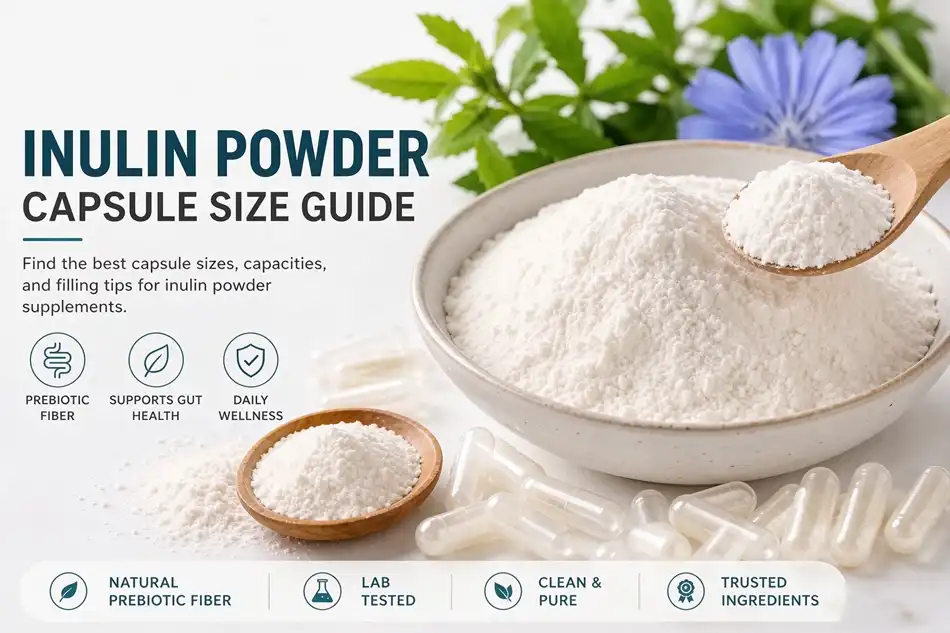
Synbiotic products are being made with inulin and live cultures in more and more probiotic powders and capsules. The prebiotic base in these foods keeps the bacteria alive by making them last longer and helping them settle in the gut. Our powder can be mixed with hot or cold water and doesn't taste different either way. It's easy to add to shakers, pill fills, and stick packs without changing how they smell or taste.
Functional Foods: Dairy, Bakery, and Bars
Low-fat yogurt and ice cream are creamier with inulin because it forms a micro-gel network when the mixture is sheared. You don't gain any calories by adding this. It makes baked goods last longer and keep them moist. It adds bulk to protein bars and meal replacements without making blood sugar go up because it only has 1.5 kcal/g. This backs up the claim that it fills you up without raising your blood sugar. When formulators want to make products that are good for diabetics or have a low GI, the fact that inulin powder has almost no GI is a big plus.
On the scientific side, it's helpful to know that inulin can handle temperatures up to 140°C and a pH level of 7. This means that it can be baked or bubbled. It is possible for some breakdown to happen if the pH is less than 4.0. Adding the powder after heat treatment or cold-fill processing keeps the chain together and makes sure it works right for acidic drinks.
Procurement Guide: Evaluating a Jerusalem Artichoke Extract Powder Supplier
There are four things that sourcing teams should look for in a company that makes Jerusalem artichoke extract powder before they approve them as a vendor.
If a procurement manager is looking for an approved seller, these are the main things they look for:
- Analytical documentation: Batch COA generated by FCC IX and USP 39 methods, with third-party verification available through SGS or Eurofins upon request. This directly supports your quality manager's sign-off.
- Certification coverage: ISO 9001, HALAL, and KOSHER (STAR-K) certifications are confirmed at Nuoyuanbio's facility, covering the majority of downstream market requirements across North America and the Middle East.
- Order flexibility: Trial orders for jerusalem artichoke extract powder start from 100 g samples, scaling to 25 kg commercial minimums and full FCL sea freight for annual frameworks—matching the staged onboarding process most distributors follow over a 6–12 week qualification cycle.
- Moisture protection: Because inulin is hygroscopic, packaging integrity is non-negotiable. Heat-sealed aluminum foil inner liners inside fiber drums prevent moisture ingress during sea transit, reducing the claim risk that sourcing teams flag as the most common dispute point.
- Logistics coverage: Shipping options include DHL, FedEx, UPS, air freight, sea freight (FCL/LCL), and DDP air or sea—handling customs clearance on the exporter's side to remove hidden import cost variables.
Nuoyuanbio's factory has ISO 9001, HALAL, and KOSHER (STAR-K) certifications, which are enough to meet the needs of most markets in North America and the Middle East.
As low as 100 grams for a trial order, they can go up to 25 kg for full FCL sea freight for yearly frameworks. Most distributors use a staged onboarding process that lasts between 6 and 12 weeks. This fits with that.Protect against moisture: Since inulin soaks up water, the package's structure must always be kept. Fiber drums have heat-sealed aluminum foil liners inside them to keep moisture out while they are being shipped by sea. The claim risk is lowered, which is what sourcing teams say is the main reason for disagreements.
You can ship with DHL, FedEx, UPS, air freight, sea freight (FCL/LCL), or DDP by air or sea. DDP takes care of clearing customs for the seller, so there are no extra costs for importing.
Conclusion
Jerusalem artichoke extract powder is a prebiotic ingredient that is old enough to be used legally in the U.S. market and can be used in many business situations. Because it has a neutral sensory profile, analytical stability from batch to batch, and is safe at high temperatures, it is a good choice for people who make supplements, functional foods, or sell bulk ingredients. Compliance and quality risks are taken care of when you buy from a company that has been approved and has a lot of paperwork. These are the main things that most procurement teams stress over.
FAQ
1. Does Jerusalem artichoke inulin cause bloating?
The balanced DP 2–60 range in our powder produces a graduated fermentation rate, which lowers acute gas production compared with short-chain FOS. Starting at 3–5 g per day and gradually increasing allows gut bacteria to adapt without discomfort. Most tolerability issues arise from excessive initial doses rather than from the ingredient itself.
2. Is this inulin suitable for low-pH beverage formulations?
The powder performs well in neutral to mildly acidic systems. At pH below 4.0, prolonged heat exposure can trigger partial hydrolysis. Adding inulin post-heat treatment or using cold-fill production methods preserves chain length and prebiotic function in acidic drink applications.
3. What is the MOQ and how do samples work?
Sample orders start at 100 g with shipping cost covered by the buyer. Commercial MOQ is 25 kg. Volume pricing tiers apply at larger quantities, and annual framework agreements are available for stable supply planning.
Partner with Nuoyuanbio for a Reliable Jerusalem Artichoke Extract Powder Supply
Nuoyuanbio combines 10+ years of production expertise, a 30,000 m² manufacturing facility, and ISO 9001, HALAL, and KOSHER certifications to deliver jerusalem artichoke extract powder that meets the documentation standards your quality and regulatory teams require. Ready stock ensures prompt shipment from sample through commercial scale. Contact our team at sales@nuoyuanbio.com or visit nuoyuanbio.com to request a COA, arrange a sample, or discuss annual pricing.
References
1. Kelly, G. (2009). Inulin-type prebiotics: A review. Alternative Medicine Review, 14(1), 36–55.
2. Roberfroid, M. et al. (2010). Prebiotic effects: Metabolic and health benefits. British Journal of Nutrition, 104(S2), S1–S63.
3. Niness, K. R. (1999). Inulin and oligofructose: What are they? Journal of Nutrition, 129(7 Suppl), 1402S–1406S.
4. Shoaib, M. et al. (2016). Inulin: Properties, health benefits and food applications. Carbohydrate Polymers, 147, 444–454.
5. U.S. Food and Drug Administration. (2018). Dietary Fiber Guidance for Industry. FDA.
6. Niness, K. R., & Holub, B. (2000). Fructooligosaccharides and inulin in functional food development. Food Technology, 54(4), 78–84.
Online Message
