
Nov 23, 2026
Can Butterfly Pea Flower Extract Powder Improve Skin Tone?
Butterfly pea flower extract powder, produced from the flower of Clitoria ternatea, is making big waves in cosmetic formulation circles – and for good reason. This deep blue botanical concentrate is rich in delphinidin-based anthocyanins and has considerable antioxidant action that directly helps the improvement of skin tone. Peer-reviewed phytochemistry journals have shown that ternatins, the hallmark anthocyanins in this extract, neutralise free radicals, limit overproduction of melanin, and promote collagen synthesis. B2B customers looking for clean-label cosmetic actives will find this ingredient to be an attractive blend of functional performance and regulatory clarity in major areas such as the United States.
Understanding Butterfly Pea Flower Extract Powder And Its Role In Skin Care
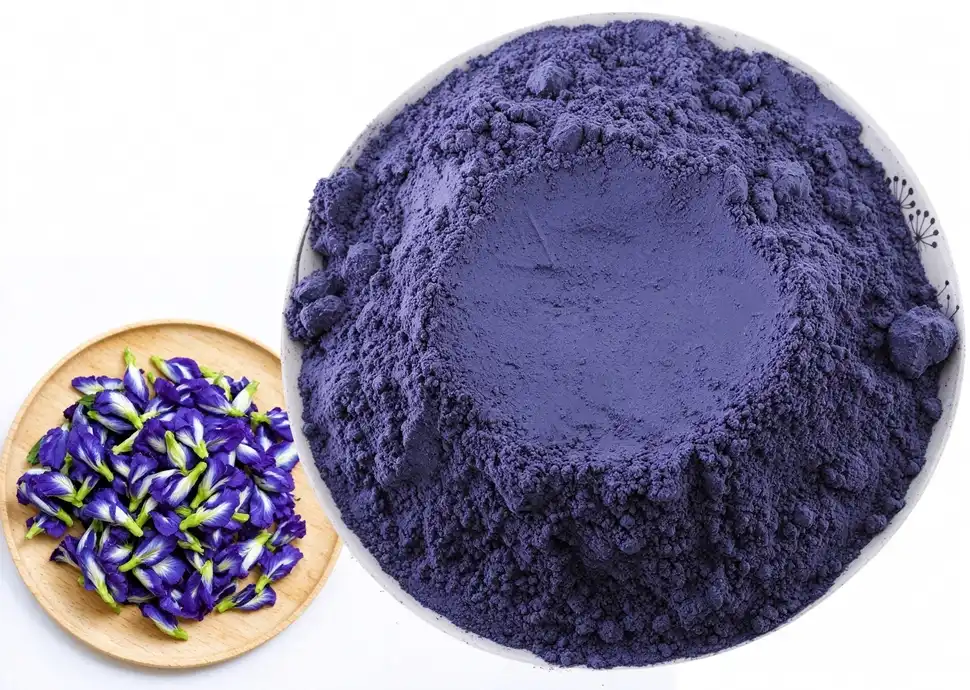
people in southeast asia have used the flowers of the clitoria ternatea plant to heal for hundreds of years. We use water to extract the concentrated butterfly pea flower extract powder that we work with today, and then we spray dry it. this keeps all of the bioactive compounds and makes a standard blue powder that is 80–100 mesh fine and can be stored on a shelf.
What Bioactives Drive Skin Benefits?
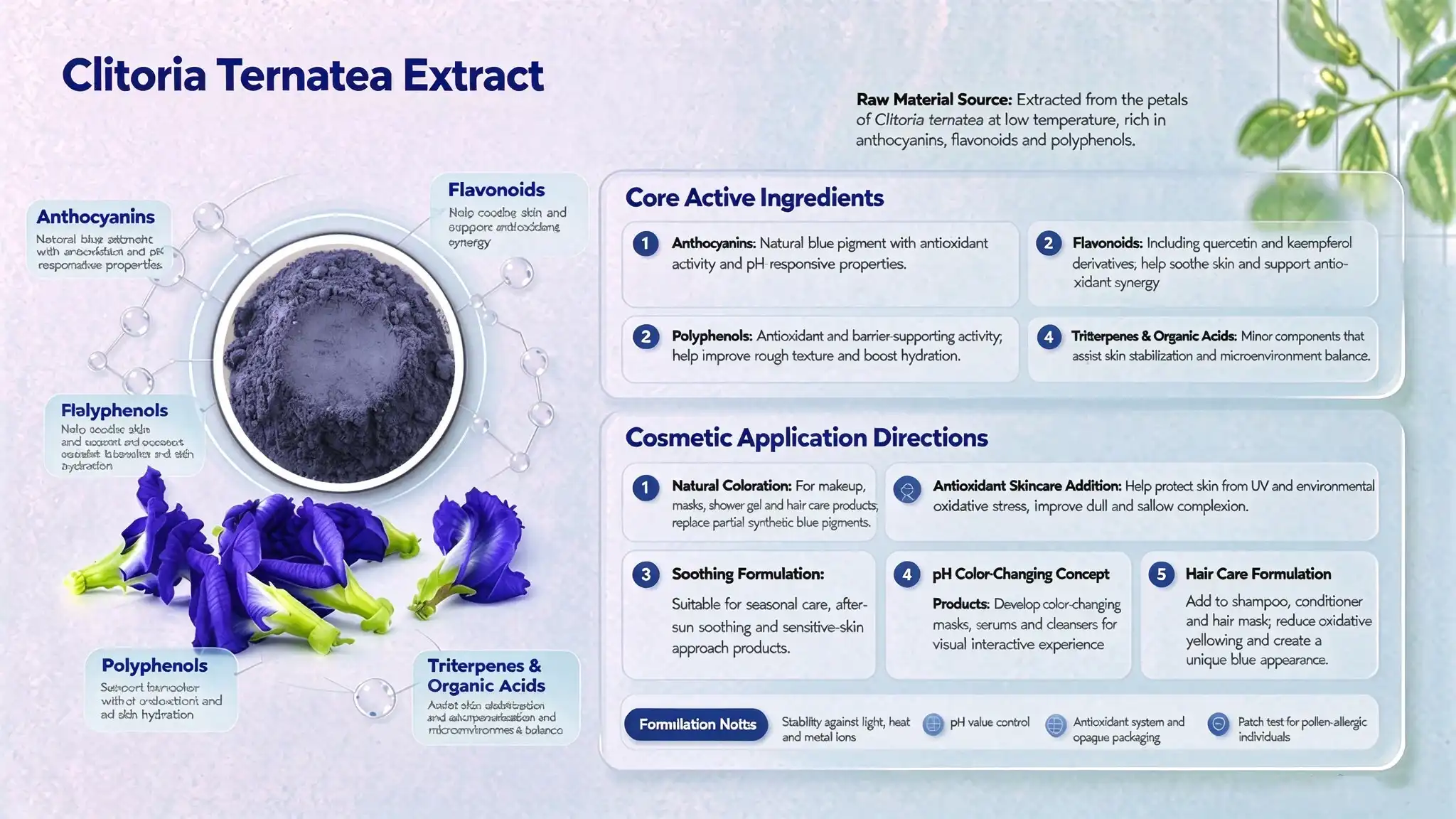
In this extract, ternatins (polyacylated anthocyanins), proanthocyanidins, and flavonols, such as kaempferol and quercetin derivatives, do most of the work. If you compare a simple flower powder to a 10:1 concentrated extract, the amount of anthocyanin in each batch is always the same. These chemicals get rid of reactive oxygen species from cells. These species are what break down collagen and make skin color uneven. These are two of the most important things for formulators to think about when they are making anti-aging and brightening products for skin.
Butterfly Pea Flower Extract Powder's Benefits for Skin Tone Improvement
It is known that this plant active should be used in makeup for a number of reasons. Buying teams can tell customers about the benefits of a product in the right way if they know about all of them.
Based on what we know about phytochemicals right now, skin tone works in these major ways:
- Melanin modulation: Delphinidin glycosides stop the activity of tyrosinase, which stops the enzyme that makes melanin. Over time, this lessens spots and makes the skin tone more even. At concentrations as low as 0.05%, anthocyanin-rich extracts have been shown to stop tyrosinase activity.
- Collagen stimulation: In order to stimulate collagen, tenatins lower the activity of matrix metalloproteinase (MMP). This keeps the collagen matrix in good shape and helps fibroblasts grow. Stretchy and tight skin is a sign of good skin tone, and this two-step process makes it both.
- Anti-inflammatory action: Post inflammatory hyperpigmentation is primarily due to low grade skin inflammation over a lengthy period of time. The extract contains quercetin molecules that slow down pro-inflammatory hormones such as IL-6 and TNF-α. This makes it less red and blotchy when applied to sensitive or flaky skin.
- UV-associated oxidative stress protection: Anthocyanins soak up UV-A rays and get rid of photo-generated free radicals. This adds an extra layer of protection that is good for skin care items that will be exposed to the sun.
Spirulina blue isn't stable in acidic settings and hasn't been shown to change melanin levels. Butterfly pea flower extract powder, on the other hand, does.
When the pH drops below 4.5, the ternatin anthocyanins stay stable longer than the spirulina phycocyanin. When making cosmetics with emulsions, where pH changes a lot, this is very important. This means that the amount of anthocyanin must stay the same from batch to batch. This is not only a quality check, but also a requirement for recipe stability.
How to Use Butterfly Pea Flower Extract Powder in Cosmetic Formulations
Recommended Usage Concentrations
For toners, essences, and face mists that are made with water, a dose of 0.05% to 0.3% w/w is usually a good range. For creams and serums that you leave on, 0.1% to 0.5% adds color and a good amount of antioxidants without making the emulsion less stable. Formats that you rinse off, like clay masks, can handle up to 1% for an interesting experience.
Formulation Compatibility
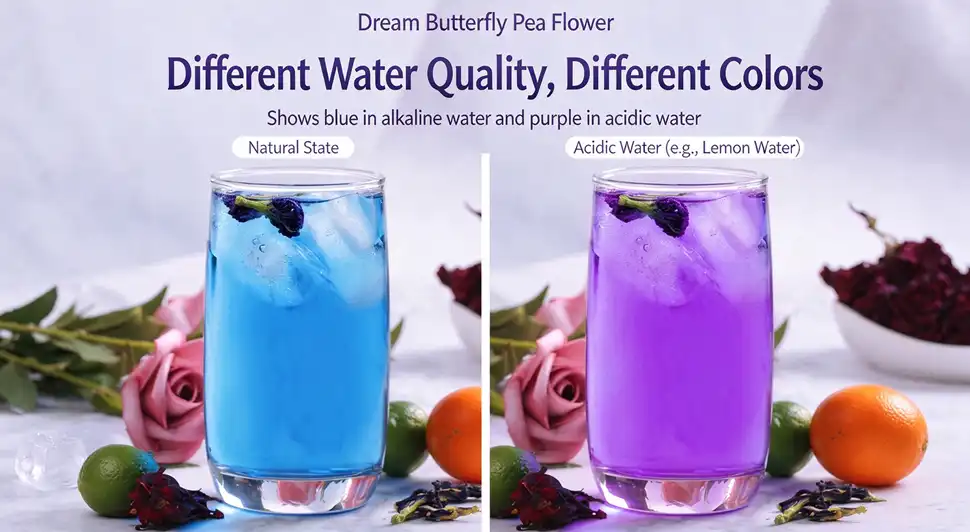
The extract and vitamin C (ascorbic acid) work well together when the pH is acidic, which is when both of them work best. It can be mixed with hyaluronic acid, peptide combinations, and niacinamide. Formulators should know that when the pH level is above 7, the color changes to a green-gray tone. It is best to set the pH to a value between 5.5 and 6.5 so that the color stays true and the makeup works well.
Storage and Shelf Life
If you keep our extract in aluminum foil that doesn't absorb water and out of direct sunlight for 24 months, it will stay strong. In places where things are made, the temperature should stay below 25°C and the humidity should stay below 60%. You don't need any special tools to store makeup ingredients in these settings, which are normal.
Evaluation and Comparison for Procurement Decisions
Source Format, Compliance Grade, and Certification Verification
There are different types of butterfly pea sources, and the style you pick will directly affect both cost and compliance.
- Extract powder vs. raw flower tea: With a 10:1 ratio, standardized extract powder gives stable amounts of anthocyanin that raw flower tea can't offer. If you use different raw materials when making cosmetics for sale, you will end up with different cosmetics, which is a risk that can't be accepted in managed markets.
- Organic vs. conventional: It costs more to get organic approval, but in North America and Europe, it helps marketers make bigger claims. The regular grade of our extract is checked for multiple pesticide residues using GC-MS/LC-MS and meets the standards set by the USDA NOP and the EU MRL. This means that mid-range brands can get the same level of safety guaranty for less money.
- Powder vs. liquid extract: Butterfly pea flower extract powder is better than liquid extract because it lasts longer, ships more easily, and lets you make the medicine in more ways. Making liquid extracts is harder because they need to be kept cold and there is less time to make them.
When evaluating suppliers, procurement teams should prioritize ISO 9001 manufacturing certification, dual HALAL and Kosher certification (essential for global distribution), HPTLC fingerprint documentation to verify authentic Clitoria ternatea identity and rule out grape skin anthocyanin adulteration, and Prop 65 compliance declarations for California-market products.
Procurement Guide: Where and How to Buy Butterfly Pea Flower Extract Powder In Bulk
Cost Drivers, Tiered Order Pathways, and Global Logistics Support
Butterfly pea flower extract powder in bulk costs different amounts based on how well it is approved, how much is used, and how reliable the source is. When you buy something, a normal 10:1 extract with full ISO/HALAL/Kosher paperwork costs more than powder that isn't approved. But the extra cost is quickly made up for by the money that is saved on future cleaning costs because of rules.
We offer a structured procurement pathway at Nuoyuanbio that removes friction at every stage. Sample orders start at 100 g for initial formulation screening, with 1 kg and 5 kg trial quantities available before committing to the commercial MOQ of 25 kg per drum. All batches ship with a full COA including heavy metal panel (Pb, As, Cd, Hg all below 1 ppm), microbiological screening (Total Plate Count ≤ 100 cfu/g in our most recent batch—well below the specification limit of 1,000 cfu/g), and TLC-verified identity.
Logistics options cover DHL, FedEx, and UPS express for samples (3–7 days); air cargo for urgent commercial shipments of 100–500 kg (5–10 days); and sea freight for orders above 500 kg (25–45 days). DDP service to North America, Europe, and Australia is available, meaning customs clearance and import duties are handled on our side—a meaningful convenience for buyers who want to remove cross-border complexity from their supply chain.
Conclusion
Butterfly pea flower extract powder is one of the few natural chemicals that may balance out skin tone, assist with clean labelling, and guaranty a functional supply chain. Published phytochemical research indicates its capacity to decrease inflammation, inhibit tyrosinase and promote collagen. It is simple to add to commercial cosmetics formulas since it dissolves fully in water, is 80-100 mesh fine and remains fresh for 24 months. Clean label botanical extracts are a consideration for procurement experts and this extract warrants significant consideration.
FAQ
1. Is butterfly pea flower extract suitable for all skin types?
Yes. The extract is non-irritating, allergen-free, and non-comedogenic, making it appropriate for sensitive, oily, dry, and combination skin formulations. No known contraindications exist at typical cosmetic use concentrations of 0.05%–0.5%.
2. How long before visible skin tone improvement is noticeable?
Consumer study timelines for anthocyanin-rich topicals generally indicate measurable brightening effects after 4–8 weeks of consistent daily use. Formulation concentration and delivery system both influence this timeline.
3. Can it be combined with vitamin C or retinol?
Vitamin C pairs well at pH 4.5–5.5 where both actives are stable. Retinol combinations are feasible in anhydrous or low-water systems; in aqueous emulsions, pH management is essential to maintain both retinol integrity and pigment color.
4. How do I verify the extract has not been adulterated?
Request HPTLC fingerprint documentation from your supplier. Our every batch undergoes High-Performance Thin-Layer Chromatography to confirm authentic Clitoria ternatea origin and the absence of grape skin anthocyanins.
Source Your Certified Butterfly Pea Flower Extract Powder from Nuoyuanbio
Nuoyuanbio supplies ISO 9001-, HALAL-, and Kosher-certified butterfly pea flower extract powder with full documentation—COA, HPTLC fingerprint, heavy metal panel, and Prop 65 declaration—ready on request. Our commercial MOQ is 25 kg with DDP shipping to the United States and beyond. Sample quantities are available immediately from ready stock. Reach our technical team directly at sales@nuoyuanbio.com or visit nuoyuanbio.com to request your sample and full documentation package today.
References
1. Oguis, G. K., et al. "Butterfly Pea (Clitoria ternatea): A Cyclotide-Bearing Plant with Applications in Agriculture and Pharmaceuticals." Frontiers in Plant Science, 2019.
2. Kamkaen, N., & Wilkinson, J. M. "The Antioxidant Activity of Clitoria ternatea Flower Petal Extracts and Eye Gel." Phytotherapy Research, 2009.
3. Nair, V., et al. "Bioactive Compounds from Clitoria ternatea and Their Functional Properties." Journal of Food Science and Technology, 2021.
4. Tan, W. N., et al. "Anthocyanin Composition and Antioxidant Capacity of Clitoria ternatea Flower Extract." Natural Product Communications, 2021.
5. Siti Azima, A. M., et al. "Phenolics, Flavonoids and Antioxidant Activity of Aqueous Extracts of Clitoria ternatea Flowers." Asian Pacific Journal of Tropical Biomedicine, 2017.
6. Lobo, V., et al. "Free Radicals, Antioxidants and Functional Foods: Impact on Human Health." Pharmacognosy Reviews, 2010.
Online Message
