
Nov 25, 2026
Blue Spirulina, the New Superfood that’s Been Around for Ages
Blue spirulina isn’t some new discovery made to seem trendy in health marketing. Spirulina has been ingested for thousands of years and the phycocyanin pigment in it – the molecule that gives it its distinctive cobalt blue – has been extensively investigated since the 1980s. What's changed is how the substance is extracted, standardized and supplied, at industrial scale. Bulk blue spirulina powder is now one of the most desired natural pigment options for food makers, nutraceutical businesses and cosmetic formulators that want to move away from synthetic colorants like FD&C Blue No. 1. It provides the unique blend of clean-label compliance, functional bioactivity and regulatory acceptability under 21 CFR 73.530 in the US.
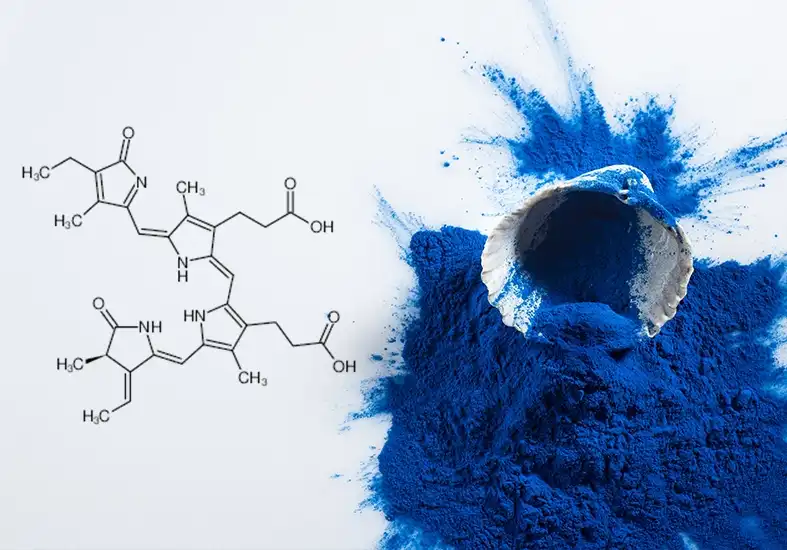
What Is Bulk Blue Spirulina Powder and Why It Matters in B2B Procurement?
The Science Behind the Blue
Phycocyanin is a chromoprotein from the freshwater cyanobacterium Arthrospira platensis, which has been consumed for generations in various regions of Africa and Mesoamerica. Whole-cell green spirulina is separated from phycocyanin, which has a distinct seaweed flavor and contains chlorophyll. It is separated via a cold water extraction technique that removes cell waste and lipids. The final product is a vivid blue powder that readily dissolves in water, does not smell like algae, and has measurable antioxidant activity. who distinction is very crucial for purchasing teams who are sourcing at scale.
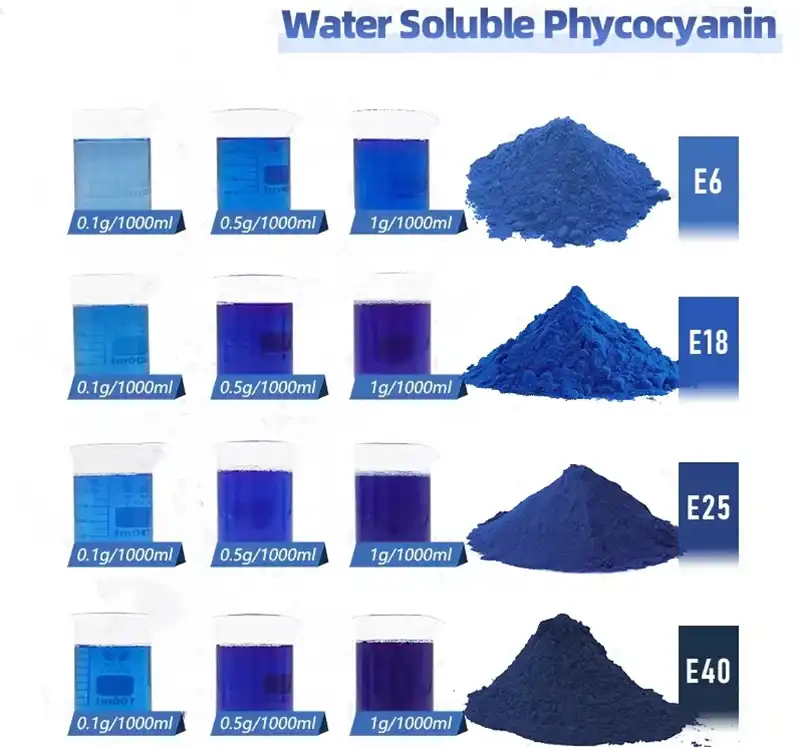
You are not purchasing a superfood supplement. You want a functional colorant with a defined color value (E-value), a protein content standard and a stability profile. These variables will directly effect your production rates. Nuoyuanbio contains four kinds of phycocyanin, E10, E18, E25 and E30, each of which has a distinct color strength. The E-value is the amount of light absorbed per 1% concentration at 618nm. E25 offers a more bluish tint than E18, for example. That is, you need lower addition rates to provide the same visual impact. This is frequently more economical for long runs.
How It Compares to Green Spirulina and Chlorella
Green spirulina is predominantly green because it contains both chlorophyll and phycocyanin. There is no phycocyanin in chlorella. Neither is a suitable fit for a producer who requires a precise, reproducible shade of blue for a beverage, candy or dairy product. Phycocyanin concentrate, particularly at E25 or E30, is the only clean label option that can be utilized on a big scale in industry and fits this criteria without having phony certification exemptions.
How to Use Bulk Blue Spirulina Powder in Your Products and Processes
Formulation Guidelines That Actually Save You Time
Phycocyanin in bulk blue spirulina powder operates well in neutral to slightly acidic aqueous conditions. It is functionally stable in the pH range of 4.5–8.0. Below pH 3.0, protein precipitates, causing color loss and apparent sediment. This is a huge concern for fizzy sports drinks or beverages with a lot of citrus in them. Sodium citrate is commonly added by formulators to acidic mixes as a stabilizer to maintain the pH above the threshold when precipitation begins to occur. And keep in mind the temperature sensitivity in your process. If the temperature exceeds 60C for long periods of time the protein will break down and the color will become less bright. The practical advise is simple: add phycocyanin at the very end of the procedure, after any heat treatment is done. This technique has been shown to work for cold process confections, post-pasteurization beverage fillings and no-bake additions.
Here are the main areas of use where this ingredient works well on a large scale:
- Food and beverage manufacturing: Natural blue colorant for gummies, hard candies, ice cream, dairy drinks, and functional sports beverages. Water solubility ensures uniform color distribution without affecting flavor. This application directly replaces synthetic Blue 1 under a clean-label declaration.
- Nutraceuticals and supplements: High phycocyanin content (≥20% C-phycocyanin per Nuoyuanbio's verified COA) supports antioxidant and anti-inflammatory claims in protein powders, wellness shots, and capsule formats. Research published in Journal of Applied Phycology has documented phycocyanin's capacity to inhibit lipid peroxidation.
- Cosmetics and personal care: Blue-hued serums, facial masks, and hair care products use this ingredient both for visual differentiation and for its documented anti-inflammatory properties. Nuoyuanbio's powder clears heavy metal thresholds well within cosmetic regulatory requirements — lead below 0.40 mg/kg and arsenic below 0.20 mg/kg per batch COA.
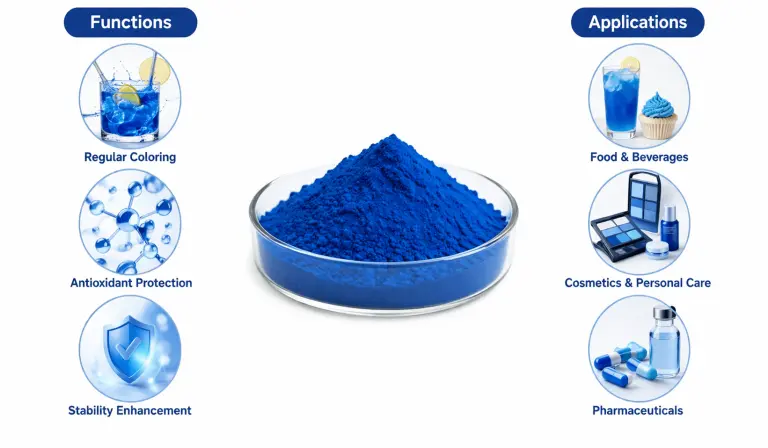
These application windows show how versatile the ingredient really is. Still, each industry needs a unique approach to dosage, pH control, and paperwork. That's why a supplier who offers expert support along with the material itself is so important for operations.
Making Smart Procurement Decisions: Comparing Bulk Blue Spirulina Options
Grade Selection and Cost Efficienc
You can choose between E10 and E30 for more than just color depth. Lower-grade E10 works well in places where a soft, pastel blue look is wanted, like in craft cheese or light-colored drinks. E25 and E30 work better in goods that need a bright, saturated color or where the addition rate needs to stay low to keep the flavor balanced.
For trials and local distribution, Nuoyuanbio has 5 kg aluminum foil bags and 10 kg drums available. For commercial orders, the minimum order size is 25 kg. Before making a commercial commitment, trial samples are available. This lets R&D teams make sure that the formulation works with the product before locking in the specifications.
The powder dissolves reliably in water if it has a moisture content below 7% and passes through an 80-mesh screen. This is an important consistency measure to keep in mind when going from a 10-liter bench test to a 5,000-liter production run. Five in-house HPLC instruments keep an eye on the differences in color values from batch to batch. If needed for regulatory submissions, testing by a third party can also be arranged.
How to Choose the Right Bulk Blue Spirulina Supplier for Your Business?
Certifications and Documentation as Non-Negotiables
A supplier's stack of certifications is not something they use for marketing; it's a way to control risk in the supply chain. Nuoyuanbio is certified by ISO 9001, HALAL, and KOSHER, and is registered with the FDA as a facility. For bulk blue spirulina powder, every package comes with full paperwork, such as a COA, MSDS, allergen statements, GMO-free declarations, and certificates of origin. This set of paperwork meets the needs to enter the US market according to 21 CFR 73.530 and supports clean-label claims around the world.
There is real regulatory nuance in this area. In the US, phycocyanin is a colorant that doesn't need to be approved before it can be sold. According to CODEX, it is known as INS 134. In the EU, it's not allowed as a food colorant, but it can be labeled as a coloring food, which calls for a different way of making the food and putting it on the package. If a seller knows the difference and has the right paperwork ready, procurement teams will not have to go back and forth with legal affairs departments for weeks.
Future Trends in Bulk Blue Spirulina Procurement and Industry Applications
There is more and more pressure from consumers to use less synthetic dye. In the US, California's AB 418 (signed 2023) law has banned a number of synthetic food dyes, and government pressure on Red 3 and other synthetic colorants is making the whole group more closely looked at. The rules that are in place are changing the structure of demand. This is not a trend; it is a lasting change in the way the natural color supply chain works.
Both cultivation and extraction technology are getting better at the same time. Controlled photobioreactor systems now let growers of Arthrospira platensis in exact light and food conditions, which leads to higher phycocyanin concentrations and fewer batch differences. Spray-drying improvement is making the product last longer on the shelf, and microencapsulation is starting to look like a good way to extend color performance into lower-pH environments where regular phycocyanin doesn't work well.
If purchasing managers make deals with vertically integrated manufacturers (those that grow, extract, and test the quality of their products on-site), they will be able to handle increases in demand without any problems. This kind of long-term supply stability is built right into Nuoyuanbio's 30,000 plant, which can process 20,000 tons of material every year.
Conclusion
As a natural alternative to synthetic Blue 1, phycocyanin in bulk blue spirulina powder has proven itself to be the most reliable choice. The science is clear, the regulatory road is clear in big countries, and the formulation problems are real, but they can be fixed with the right technical help. The quality of the information you get before you commit is what makes the difference between a good buying choice and a bad one. Nuoyuanbio offers grades E10 through E30, full batch paperwork, and sample availability to help you make a choice based on facts, not guesses.
FAQ
1. What pH range is safe for phycocyanin in food applications?
Phycocyanin retains color stability between pH 4.5 and 8.0. Below pH 3.0, protein precipitation occurs and visible color loss follows. Sodium citrate buffering is a practical intervention for mildly acidic beverages.
2. What is the difference between E18 and E25 grades?
The E-value reflects pigment concentration measured by UV absorbance at 618nm. E25 contains more concentrated phycocyanin than E18, requiring a lower addition rate to achieve the same blue intensity — typically more cost-effective in high-volume applications.
3. What documents accompany each commercial shipment?
Each shipment includes a Certificate of Analysis, MSDS, allergen statement, GMO-free declaration, and certificate of origin. Additional regulatory documentation is available upon request.
4. How should phycocyanin powder be stored?
Store in a sealed, opaque container below 25°C, away from direct sunlight and humidity. Shelf life is 24 months from the manufacturing date under these conditions.
5. What is the minimum order quantity?
Sample and small-volume trial orders are accepted. Commercial order MOQ is 25kg, with flexible packaging options including 5kg aluminium foil bags and 10kg drums.
Connect With Nuoyuanbio — Your Trusted Bulk Blue Spirulina Powder Supplier
Nuoyuanbio combines over a decade of manufacturing expertise with ISO 9001, HALAL, and KOSHER certification to deliver consistent, document-ready phycocyanin at every scale. Whether you are validating a new clean-label formulation or securing a long-term supply of bulk blue spirulina powder for commercial production, our team is ready to support your process. Request a sample or technical data sheet directly at sales@nuoyuanbio.com.
References
1. Spolaore, P., Joannis-Cassan, C., Duran, E., & Isambert, A. Journal of Bioscience and Bioengineering, 2006.
2. Romay, C., Gonzalez, R., Ledon, N., Remirez, D., & Rimbau, V. Current Protein and Peptide Science, 2003.
3. Eriksen, N. T. Applied Microbiology and Biotechnology, 2008.
4. Borowitzka, M. A. Journal of Applied Phycology, 1999.
5. U.S. Food and Drug Administration. Code of Federal Regulations, Title 21, Section 73.530 — Phycocyanin. FDA, 2023.
6. Martínez-Francés, E., & Escudero-Oñate, C. Algal Research, 2018.
Online Message
